In the German market, server hosting and operations face pressures related to compliance, localization, and costs. This article focuses on the “implementation roadmap for using automated tools to improve the efficiency of server hosting and operations in German companies,” offering practical strategies and steps to help operations teams enhance efficiency and ensure stable delivery while maintaining security and compliance.
Common challenges for German companies in hosting and operations include compliance requirements (such as GDPR), data residency, localization support, complex multi-environment configurations, and personnel costs. Manual processes can easily lead to configuration drift, delayed patching, and extended recovery times, hindering business agility and security improvements.
When selecting automation tools, compatibility, scalability, security, and the operational ecosystem should be the core considerations. Key evaluation points include support for existing environments (virtualization, bare metal, cloud platforms), API and scripting capabilities, auditing and logging functions, as well as compliance with local German regulations.
Integrating configuration management and patch deployment into automation can significantly reduce the risks of human error and drift. It is recommended to use basic images, core components, and security baselines as units to establish repeatable configuration templates and patching strategies, ensuring consistency and auditability across data centers and environments.
Automated monitoring and alerts can reduce fault response time. Through unified metric collection, alerting procedures, and centralized log analysis, real-time awareness of performance, availability, and security incidents is achieved, while the handling processes for common incidents are automated to reduce the need for manual intervention.
It is recommended to implement it in phases: Phase 1 involves evaluating tools and processes, as well as conducting a pilot on a small scale ; Phase 2 expands to critical business environments and improves rollback and security policies ; In the third phase, full automation is achieved, with SLAs and KPIs incorporated. For each phase, it is necessary to define acceptance criteria and risk control points.
Automation is not simply the replacement of tools, but a reengineering of operations processes. It is necessary to clarify responsibility boundaries, establish change approval and automated script code review processes, and promote a DevOps culture and documentation, to ensure that operations personnel transition from manual performers to automated engineers.
When deploying automation in Germany, data protection and compliance must be given top priority. It is necessary to ensure that log and audit retention policies, access control, and key management comply with GDPR and local regulations, and to conduct security reviews and penetration testing on automated processes to reduce exposure to risks.

Regularly evaluate the effectiveness of automation using key metrics such as average time to repair (MTTR), deployment success rate, number of configuration drifts, and number of compliance incidents. Establish a continuous improvement mechanism to incorporate feedback and abnormal cases into the iteration of automation strategies, gradually improving coverage and stability.
Implementation recommendations include establishing rules first before automating, starting with high-value scenarios while maintaining a human oversight window, and emphasizing rollback and disaster recovery plans. Avoid common pitfalls such as over-automating critical changes, neglecting audit trails, and having insufficient test environments, thereby ensuring stability and compliance.
Summary: For German companies, implementing automation tools requires following a path of assessment, piloting, phased rollout, and continuous optimization, while ensuring security and compliance. It is recommended to first build auditable basic automation modules, then gradually expand the scope to achieve stable improvements in operational efficiency and cost control.
- Latest articles
- Taiwan CN2 Beginner’s Tutorial: Explaining Acceleration and Routing Adjustments with Examples
- Evaluation of actual bandwidth performance of Vietnamese VPS CN2 to help you choose the right data plan
- From a network perspective: Instability of Hong Kong servers CN2 and suggestions for improving routing strategies
- Security and Compliance Perspective: The Role of Server Farms in Hong Kong and Data Protection Practices
- How to determine where to buy Thai servers for the best cost-performance ratio during initial deployment
- How to Choose Recommended Vietnamese Cloud Servers Based on Budget: Balancing Performance and Availability
- Interpretation of regulations and certifications regarding compliance requirements for generator-powered RVs imported from Germany
- Which is a good option for small teams to set up an American VPS at low cost and achieve quick deployment?
- How to achieve a zero-downtime migration by smoothly switching local services to servers hosted in Los Angeles, USA
- Key Points for Implementing Security and Compliance Requirements as Well as Physical Access Controls in Hong Kong’s HKE Data Centers
- Popular tags
-
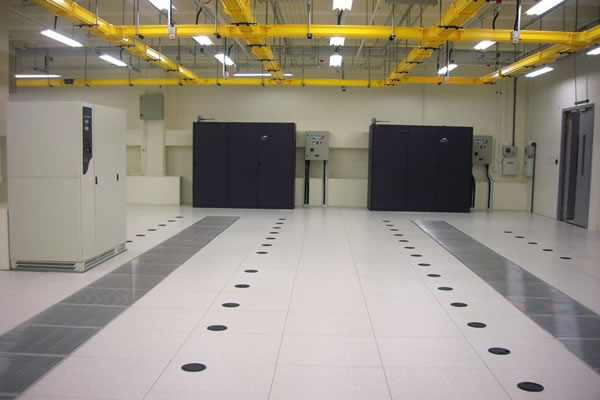
how to create an efficient computer room space for german engineers
this article explores how to create an efficient computer room space for german engineers, providing professional advice and best practices from design to implementation. -

how to choose suitable deutsche telekom computer room wiring materials
this article explores how to choose suitable deutsche telekom computer room cabling materials, providing professional advice and practical guidance. -

In-depth understanding of the security and management strategies of German data rooms
A deep understanding of the security and management strategies of German data rooms, discuss the security measures and management methods of data centers, and ensure data security and business continuity.